

Andes Pass Shuts Again After Record Snow Closure
The main crossing between Chile and Argentina is closing again today as fresh snow bears down on the Andes—less than a week after it emerged from its longest shutdown in history.
The Los Libertadores/Cristo Redentor crossing spent 34 consecutive days closed, from July 14 to August 18, as repeated snowstorms, strong winds and ice buried the high mountain route. The previous record closure was 26 days, set in 2023.
At the height of the shutdown, crews on the Chilean side were clearing snow walls and blocks of more than 6 m (20 ft) high, while thousands of trucks accumulated on either side of the border.
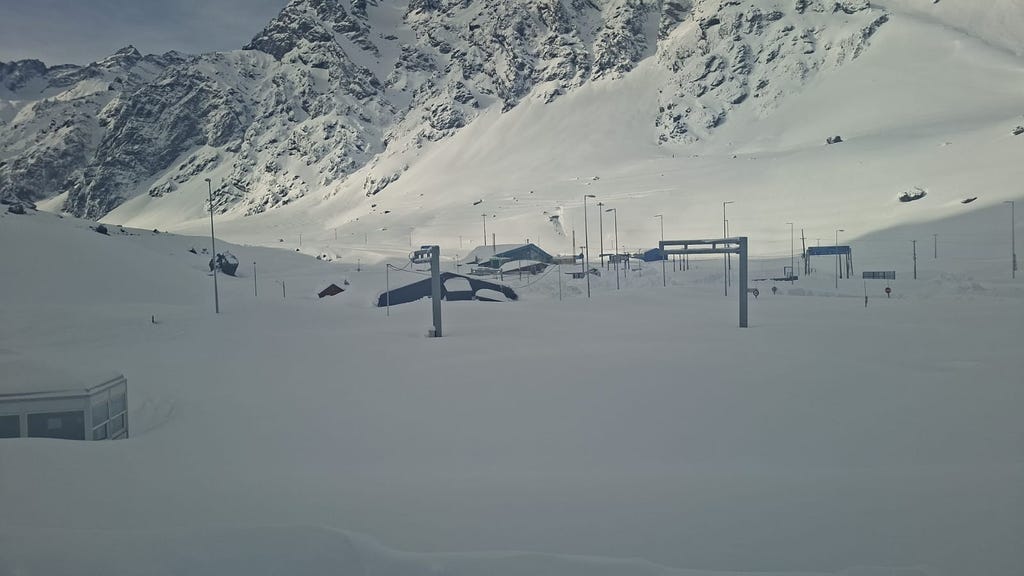
The crossing finally reopened to freight on Aug 18.
Cars and buses were allowed through from Aug 22.
It didn’t last.
Authorities have ordered another preventive closure today, Aug 24, as a new spell of snow and unstable weather moves into the Andes. Barriers at Guardia Vieja and Uspallata begin closing at 1 PM Chilean time, with the international tunnel shutting at 3 PM.
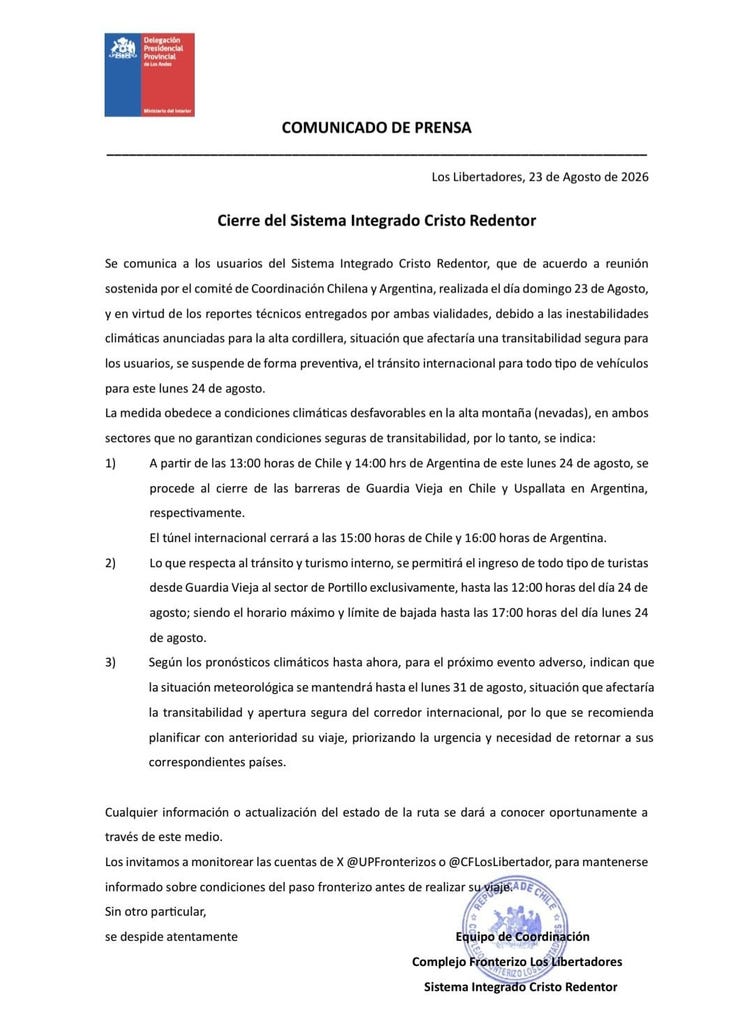
Officials warn that wintry conditions could persist through Aug 31, with further heavy snow expected along the cordillera.
Antarctic Winter Still Refuses To Break
The persistence of the cold this Antarctic winter is truly impressive.
At Amundsen–Scott South Pole Station, the temperature fell to -72.3C (-98.1F) on Aug 23—another plunge toward -100F with little more than a week of meteorological winter remaining.
More telling is the average.
Through Aug 23, the South Pole was averaging -62.3C (-80.1F), some 2.6C below its August norm of -59.7C (-75.5F).
That follows a cold June and an exceptionally cold July.
On the current pace, the June–August mean should finish around -62.2C (-80F)—roughly 2.8C below normal.
