

Antarctica Registers -75.5C (-103.9F), Sea Ice Surges
On August 14, 2024, temperatures in Antarctica hit extreme lows, with Dome Fuji AWS registering -73.5C (-100.3F) and Vostok dropping to -75.5C (-103.9F).
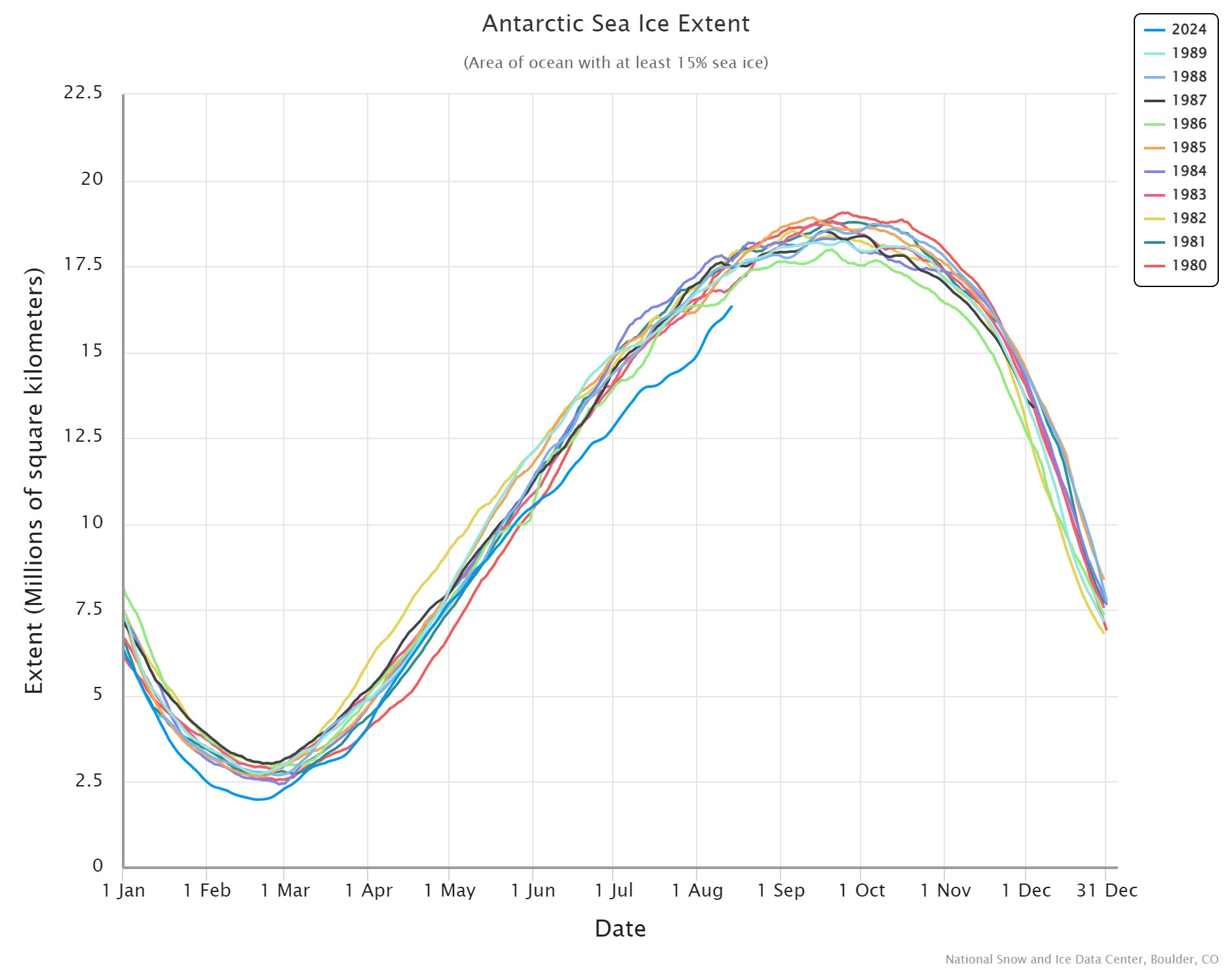
Accompanying the anomalously cold, Antarctic sea ice is up 1.5 million square kilometers compared to the same date last year—an area more than twice the size of Texas.
Around the Antarctic Peninsula, in particular, sea ice coverage is at or near record highs, standing in stark contrast to the incessant mainstream shrills of climate doom.

Despite this major growth, media outlets like the BBC have remained silent, choosing instead to focus on narratives that support the theory of man-made climate change rather than unobjectively report on the truth, which is their supposed mandate.
While AGW Party-funded climate models foretell of vanishing ice due to human prosperity, this year's Antarctic surge highlights the fatal flaws in those assumptions. Polar ice behavior, especially sea ice around Antarctica, is far more complex and variable than the press and climate activists want to acknowledge.
Things have turned around big time over the past few weeks alone, with sea ice extent, after a late-July slowdown, re-approaching levels of the 1980s:
This surge won't garner the attention it demands.
