
Record Snowfall Buries Eastern Turkey; Russia Deploys New Ice-Blasting Unit; Rare Late-Season Arctic Blast Targets Great Lakes; + Australia’s Missing Heat
Atmospheric CO2 was <300 ppm in the late 1800s, yet inland Australia was posting summer temperatures comparable to, and often exceeding, those in the modern record.

Record Snow Buries Eastern Turkey
In eastern Turkey, snow depths have surged to extraordinary levels in the high mountains of Van Province.
At the Karabet Pass, along the Van–Bahçesaray highway, snow depth has reached 3.38 m (11.1 ft) at an elevation of about 3,000 m (9,840 ft), according to Turkey’s General Directorate of Meteorology.
The accumulation ranks among the most extreme measurements recorded in the country.
The pass has been closed to traffic since December 27 due to relentless snowfall and the ongoing risk of avalanches. And with the main route buried, residents of Bahçesaray can only reach the provincial capital of Van via a 250 km (155 miles) detour.
In some areas near Van, snow depths have unofficially exceeded 4 m (13 ft), forcing heavy machinery to cut tunnels through the snowpack to keep local roads usable.
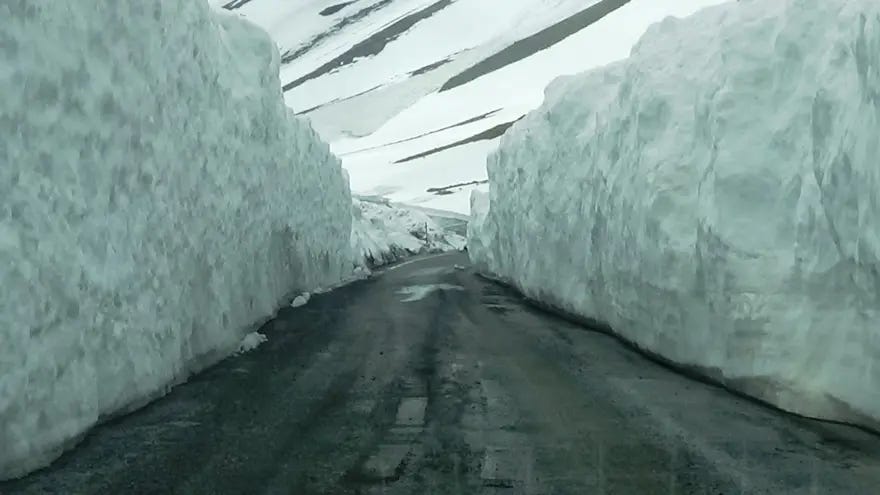
Snowfall across the wider Eastern Anatolia region has also impressed of late, with authorities issuing avalanche warnings across mountainous terrain near the eastern Black Sea region and along the Turkey–Iran border.
The Bahçesaray region itself is known locally as the “Ninth Planet”—a nickname reflecting its unusually long winters and persistent snow cover that consistently lingers well into spring.
Russia Deploys New Ice-Blasting Unit
Authorities in Russia’s southern Urals have begun blasting river ice ahead of the spring thaw, detonating charges along the Sim River in Chelyabinsk Oblast —among others— to break up thick winter ice and prevent dangerous jams.
Ice jams occur when large slabs pile up and block the channel, forcing water levels to rise rapidly and flood nearby towns. Controlled explosions fracture the ice so meltwater can move downstream before the thaw accelerates.
While the practice itself is routine in cold regions, Russian authorities recently created a dedicated ice-blasting unit to carry out the work. The move comes as the country’s emergency officials warn that large snow reserves this year across several regions have raised the risk of significant spring flooding.
